Quick answer
Choose a hydraulic winch when the machine already has a hydraulic system, the duty cycle is heavy, high starting torque is required, or the winch must operate in demanding marine or industrial conditions.
Choose an electric winch when electrical power is easier to access, the duty is light to medium and adding hydraulic plumbing would not be practical.
Neither drive type is automatically better. Compare the available power source, actual duty and required rope performance before choosing the package.
Hydraulic winch vs electric winch comparison
| Factor | Hydraulic winch | Electric winch |
|---|---|---|
| Power source | Pressure and flow from a machine circuit or power unit | DC or AC power from battery, generator or grid |
| Duty cycle | Frequent or longer operation with suitable cooling | Often intermittent; motor thermal duty must be checked |
| Starting torque | Strong low-speed torque with a matched motor | Depends on motor, gearbox and available current |
| Control | Valves, brakes, counterbalance and proportional control | Contactors, inverters, controllers and limit switches |
| Installation | Hoses, fittings, valves, return and possibly case drain | Cables, protection and suitable electrical supply |
| Environment | Common in marine, construction and heavy mobile duty | Convenient for vehicles, workshops and lighter handling |
When a hydraulic winch is usually better
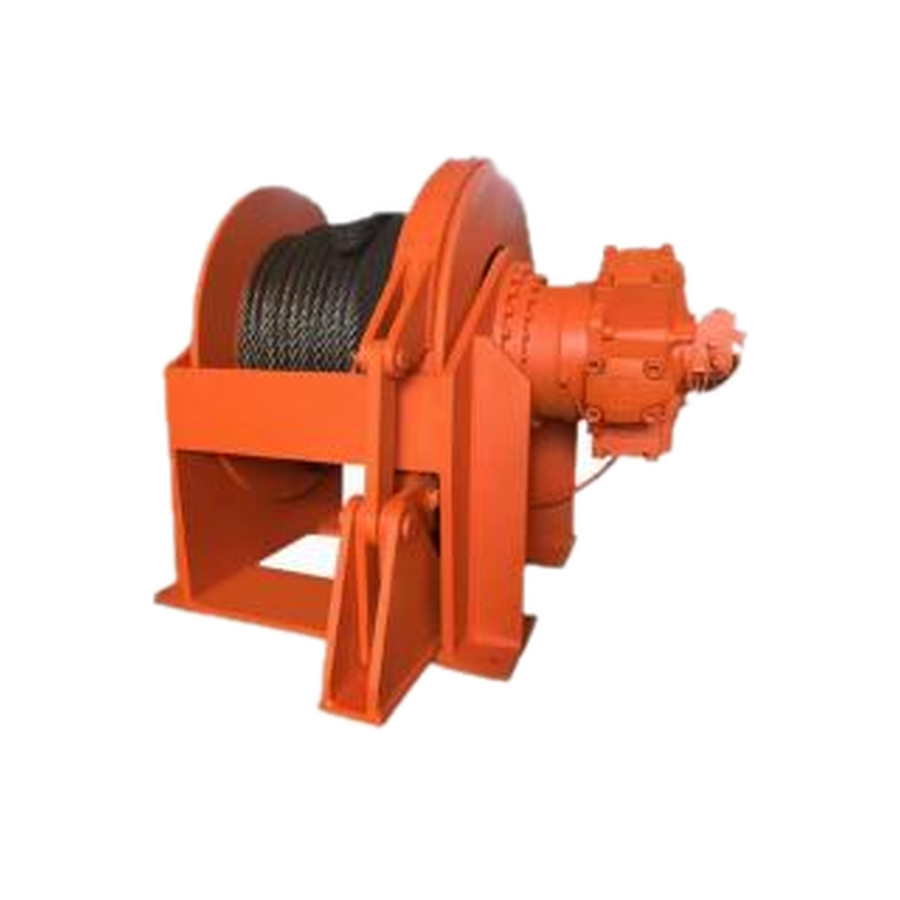
Hydraulic drive is often the stronger starting point when equipment already uses hydraulics. Heavy pulling, frequent operation, integrated load control and harsh environments can favor a JSJ or compact NJ hydraulic winch.
When an electric winch is usually better
Electric drive can be practical where no hydraulic system exists, the duty is intermittent, remote electrical control is convenient and oil plumbing would add complexity. Review JSD electric winches for electrically driven rope handling.
Do not compare only by rated line pull
Two winches with the same nominal pull can behave differently. Compare pull with line speed, rope layer, duty cycle, brake design and power supply. Hydraulic flow can limit speed, electric thermal duty can limit repeated operation, and line pull falls as rope layers build.
Power system considerations
For hydraulic drive, confirm pressure, flow, return pressure, cooling and case-drain requirements. A custom hydraulic power unit may be needed where no supply exists. For electric drive, confirm voltage, current, cable length, controller, protection and environmental sealing.
Brake and control differences
Hydraulic winches commonly use spring-applied, hydraulically released brakes with counterbalance or manifold control. Electric winches may use electromagnetic, mechanical or motor braking. Holding and controlled lowering must be checked against the actual load and duty.
Motor and gearbox selection
Hydraulic packages may use BM orbital motors for compact duties or QJM radial piston motors where heavier starting torque is required. Gear ratio, drum diameter and motor speed must be matched together.
Selection checklist
- Pulling, lifting, recovery, towing, mooring or positioning duty
- Required line pull, line speed and rope layer
- Rope diameter, length and drum capacity
- Available hydraulic pressure/flow or available electrical voltage/current
- Duty cycle and operating environment
- Brake, lowering, free-spool, clutch and remote control
- Installation space and rope outlet direction
Frequently asked questions
Is a hydraulic winch better than an electric winch?
Not in every situation. A hydraulic winch is often a stronger starting point when hydraulic power is already available and the machine has frequent or demanding duty. An electric winch can be more practical for lighter intermittent work where electrical power is readily available.
Can an electric winch replace a hydraulic winch?
Sometimes, but first confirm the required line pull, line speed, duty cycle, installation space and available electrical supply. A replacement must also account for braking, control and the original machine interface.
What information is needed to select a winch?
Provide the work to be done, required line pull and speed, rope diameter and capacity, duty cycle, installation drawing and the available hydraulic or electrical power. Photos of the existing installation are useful when the interface is not yet documented.
JST recommendation
Send the load, speed, rope, duty-cycle and available-power data. JST can compare the two drive types and recommend a practical starting configuration.
Technical information is provided for preliminary selection. Confirm the selected model, installation and application requirements before ordering.