Define the marine duty first
State whether the winch is used for mooring, towing, anchor handling, deck lifting, recovery, cable pulling, dredging or general rope handling. Describe static holding, intermittent pulling, controlled lowering, shock loading and reversing. Identify the vessel environment and whether power comes from an existing circuit or a new hydraulic power unit.
Confirm line pull and rope layer
A winch produces its highest line pull on the first layer. As rope builds on the drum, the effective diameter rises, line pull falls and line speed rises.
| Selection item | Why it matters | What to provide |
|---|---|---|
| Rated line pull | Defines output torque and gearbox size | kN or tonnes and first or outer layer |
| Line speed | Follows flow, displacement and drum diameter | Loaded and acceptable no-load speed |
| Rope diameter | Affects groove, bending ratio and safety factor | Diameter and construction |
| Rope capacity | Defines width, flanges and layers | Required length and maximum layers |
Match hydraulic pressure and flow
Pressure mainly affects available torque and pull; flow mainly affects motor and line speed. Provide normal working pressure, maximum pressure, available flow and return-line backpressure. Route any required case drain correctly to avoid seal damage and heat.
Choose motor and gearbox as a package
Compact or medium-duty winches may start with a BM orbital motor or NJ compact winch. Heavy-duty low-speed work may use a QJM radial piston motor. Integrated reduction and brake arrangements can be reviewed through JSC transmission units. The selected model must be checked against the duty and interface drawing.
Treat the brake as part of the safety system
Many marine winches use a spring-applied, hydraulically released multi-disc brake. Lowering, towing or dynamic loads may also require a counterbalance valve, over-center valve or dedicated manifold to control overrunning motion and rope slack.
Check drum, rope and corrosion requirements
Drum core, flange height, groove design, fairlead position and rope entry angle affect spooling and service life. For salt-air service, specify the paint system, surface treatment, fasteners, seals and maintenance access rather than assuming a generic marine finish.
Hydraulic or electric drive
Hydraulic winches are a practical starting point when the vessel already has hydraulic power, starting torque is high or duty is heavy. Electric winches can simplify lighter-duty installations with available electrical power. Read the full hydraulic versus electric winch comparison.
Recommended JST starting points
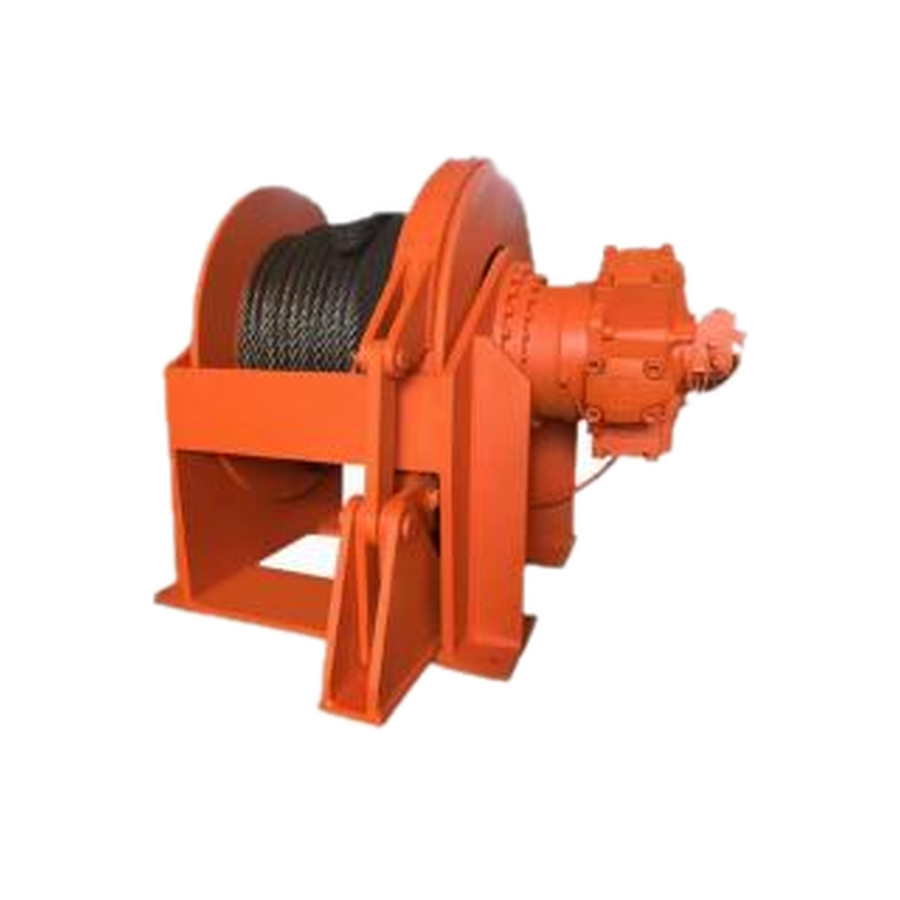
JSJ hydraulic winches support custom configurations around line pull, rope capacity, motor, planetary gearbox, brake, balance valve and mounting structure. NJ compact winches can fit auxiliary pulling and recovery duties. Final configuration follows confirmed requirements.
Inquiry checklist
- Application and equipment type
- Required line pull and loaded line speed
- Rope diameter, length and expected layers
- Available pressure, flow and return conditions
- Brake, free-spool, clutch and manifold functions
- Installation drawing, rope outlet and environment
Technical information is provided for preliminary selection. Confirm the selected model, installation and application requirements before ordering.
Confirm lifting duties, brake redundancy and any class or project requirements separately from pulling duty.