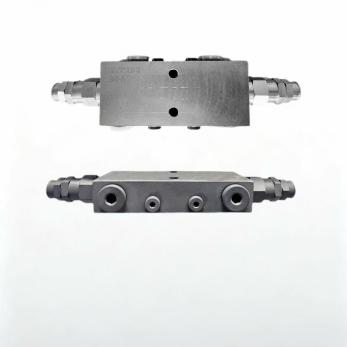
Pre-Quote Inquiry Checklist
Gather these files and parameters before asking for a quotation:
| Inquiry item | What to send | If not finalized yet |
|---|---|---|
| Circuit & drawings | Hydraulic schematic, plus any existing 2D block drawing or 3D model | Describe the machine duty and step-by-step actuator movements |
| Operating duty | Rated working pressure, peak pressure, and maximum flow per branch | Send known pump flow and relief setting, and note what is open |
| Valves & cavities | Required functions, plus chosen valve models or cavity standards if selected | List the cylinder, motor, or winch actions to control |
| Supply scope | State whether to quote a bare machined block or a block supplied with valves | Ask to compare bare-block vs. valve-fitted scope |
| Ports & threads | Metric, BSPP, SAE, NPT, or custom threads; port faces and wrench clearance | State your thread standard and preferred exit sides |
| Mounting & envelope | Mounting face, bolt pattern, sealing surface, size limits, and coil/tool access | Send machine-bay photos and a rough envelope sketch |
| Block material | Aluminum, steel, or ductile iron if required by project rules | Leave open for review based on pressure and weight |
| Testing & documents | Any bench testing, leakage check, or drawing/document needs | Raise during the pre-machining technical review |
Hydraulic Schematic, Valves, and Supply Scope
JST designs each cartridge valve manifold from the circuit diagram, putting the control valves into one block to cut down hose routing, leak points, and installation space. If you already have a manifold drawing, a 3D model, or chosen cartridge valve models and cavity standards, attach them with the schematic. Also state upfront whether the quote should cover a bare machined block or a complete block supplied with valves.
When a formal schematic is not ready, send a plain written sequence of what each cylinder or motor does across the cycle, and list the valve functions needed:
- Relief for system pressure protection
- Check valves for one-way flow and circuit isolation
- Counterbalance valves for load holding and controlled lowering on winches or cylinders
- Flow control for actuator speed
- Directional control for start, stop, and reversing
If the circuit handles an overrunning load—such as a travel drive, slewing motion, or winch drum—say whether anti-cavitation protection is needed. If the machine needs proportional control instead of on/off switching, note that early so coil clearance and cavity spacing can be checked.
System Pressure, Flow, and Block Material
Internal passages and valve cavities must match what the host system actually delivers. Send rated working pressure, peak surge pressure, and the maximum flow each branch sees—not just the pump nameplate flow if return or parallel paths see different rates. Pricing is quoted to the operating duty and the reviewed design, and final sizing, configuration, and interface require JST engineering confirmation before production.
JST machines custom manufactured hydraulic valve blocks in aluminum, steel, or ductile iron depending on operating pressure, weight limits, and corrosion exposure. Specify the material if your project fixes one, or leave it open for JST to review against your pressure and mounting setup.
Port Threads, Mounting Face, and Space Envelope
A custom hydraulic manifold can check out on paper and still clash on the machine if a fitting hits a frame rail or a solenoid coil blocks a wrench. State the port thread standard—Metric, BSPP, SAE, NPT, or custom—which face each pressure, tank, and work port exits from, and the hose bend and wrench space around it.
Define how the block mounts. If it bolts onto a hydraulic power unit or compact control station, or sits in a circuit driving a JHM radial piston motor or JNM radial piston motor, share the mounting face layout, bolt pattern, sealing surface, and nearby keep-out zones. Keep cartridge valves, adjustment screws, and coils pointed toward an open side for maintenance access. For retrofits or tight bays, attach workshop photos and a sketch with maximum length, width, and height.
FAQ
Can we request a quote without a finished hydraulic schematic?
Yes. Send a written sequence of operations, load-holding requirements, pressure, and branch flow. JST can review the target control logic and propose a cartridge valve manifold layout for your confirmation.
When do we get installation drawings to check fit and clearances?
After reviewing your schematic, valve list, port threads, and mounting interface, JST supplies outline and installation drawings so your team can verify bolt holes, port directions, and coil clearance—and confirm any testing or leakage-check details—before machining starts.
Request a Design Review from JST
Founded in 2007, Ningbo JST Hydraulic Co., Ltd. (JST) operates a 13,000 m² plant with about 50 people manufacturing JHM and JNM hydraulic motors, normally closed hydraulic winches up to the 60 t class, power units, and custom manifolds.
Send your schematic, drawings or bay photos, and duty data through the JST contact page, by email to jw.luo@jst-hydraulic.com, or by telephone and WhatsApp at +86 186 6857 0723.
Technical information is provided for preliminary selection. Confirm the selected model, installation and application requirements before ordering.