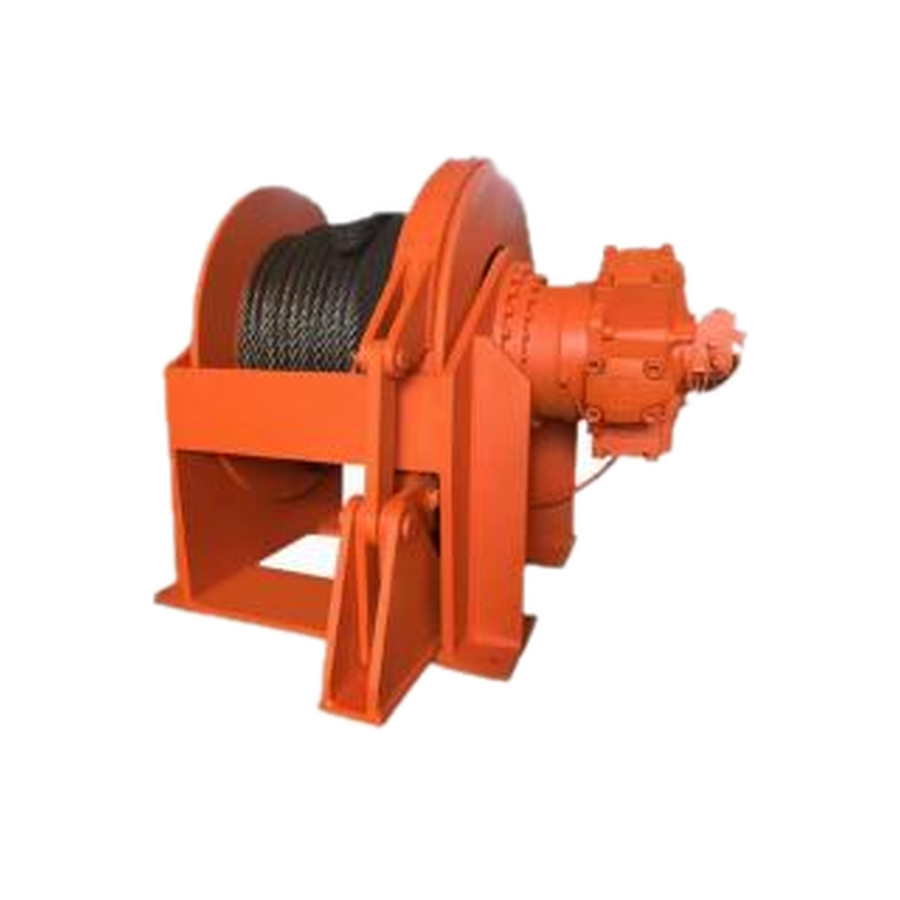
Start with the machine and the job
Describe the base machine, attachment location and intended job. A front-mounted recovery winch, boom-mounted handling winch and compact auxiliary winch can have very different load paths and controls even if their requested line pull is similar.
State whether the winch pulls horizontally, handles a suspended load, repositions equipment or assists recovery. The answer affects structure, brake and valve requirements as well as the applicable operating and safety procedure.
Confirm the auxiliary circuit, not a nominal value
The attachment must work with the machine’s actual auxiliary circuit, not a value assumed from machine size. Record working pressure, relief setting or peak pressure where available, and usable flow as separate values with their units. Explain whether the machine can provide pressure and flow simultaneously at the requested engine speed and whether other functions share the circuit.
Hoses, couplers, return routing and case-drain provisions can limit an attachment even when the pump rating looks sufficient.
Match line pull to drum, rope and mounting structure
Line pull must be considered at a stated rope layer and effective drum radius. The attachment frame, mounting plate, pins, boom or chassis interface must transfer the resulting load into the machine without relying on the winch housing as a structural member.
Rope length, rope diameter, fleet angle, fairlead or roller arrangement and access for re-reeving need practical review. A compact winch can be physically small while its resulting load path through the attachment remains significant.
Specify control and holding behavior
Decide how the operator starts, stops and modulates the winch: auxiliary pedal, joystick function, electric solenoid control or a dedicated valve. State whether controlled lowering, free spool, emergency stop or remote operation is required.
For suspended or overrunning loads, the machine designer must define the appropriate brake, counterbalance and safety arrangement. A horizontal-pull recovery attachment should not be assumed suitable for lifting simply because it has a brake.
Send a compact attachment brief
- Machine model and photographs of the proposed mounting location
- Required line pull and rope speed
- Rope and drum preference
- Available pressure and flow, each with units
- Duty cycle, environment and existing drawing
- Installation envelope and intended control method
For an unusual application, describe what moves, where the load goes and how the operator will use the attachment.
Selection conclusion
The best mobile winch attachment begins with its interface to the machine. Verify real auxiliary hydraulics, mounting load path, drum and rope duty, and operator control before choosing a winch series. This keeps the discussion focused on a workable package rather than a standalone pull rating.
Technical information is provided for preliminary selection. Confirm the selected model, installation and application requirements before ordering.