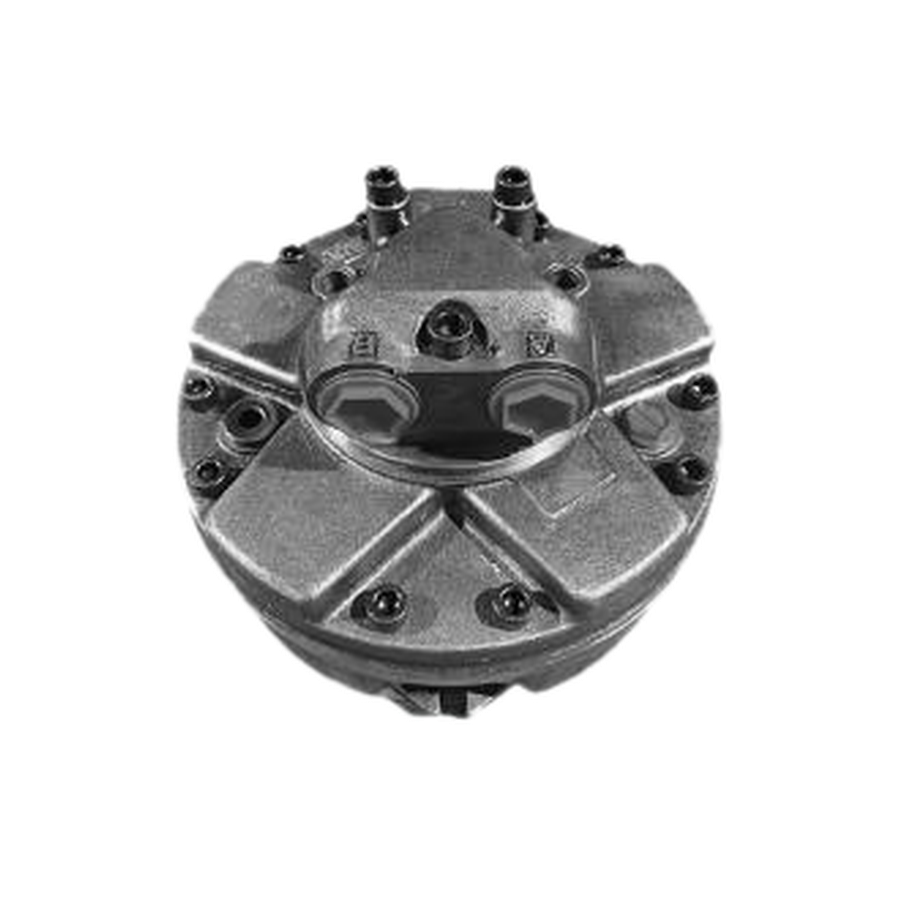
Practical comparison
| Selection point | JHM Series | JNM Series |
|---|---|---|
| Primary focus | Creeping-speed stability and integrated configuration options | Wide displacement coverage and high starting torque |
| Overall actual displacement reference | Approximately 63 to 4,828 mL/rev | Approximately 59 to 4,298 mL/rev |
| Pressure reference | Varies by model, duty cycle and hydraulic circuit; confirm the selected model limits | Varies by model, duty cycle and hydraulic circuit; confirm the selected model limits |
| Speed reference | Varies by model, displacement and duty; confirm the selected model limits | Varies by model, displacement and duty; confirm the selected model limits |
When JHM is the better starting point
Begin with JHM when the machine needs stable motion at very low speed, frequent starts, controlled lowering or an integrated brake and valve arrangement. Typical discussions include deck machinery, winches and heavy positioning drives.
When JNM is the better starting point
Begin with JNM when the required displacement or torque range is broader, or when the application needs a large radial piston motor selected around high starting torque. Winches, drilling equipment and heavy rotary drives are common examples.
Do not cross-reference by displacement only
Two motors with similar displacement can still differ in shaft capacity, mounting dimensions, port layout, permissible back pressure, speed limit and brake arrangement. Compare the full installation drawing and hydraulic duty before approving a replacement.
This guide supports preliminary discussion. Final selection must be confirmed from the specific model data, hydraulic circuit, installation drawing and machine safety requirements.