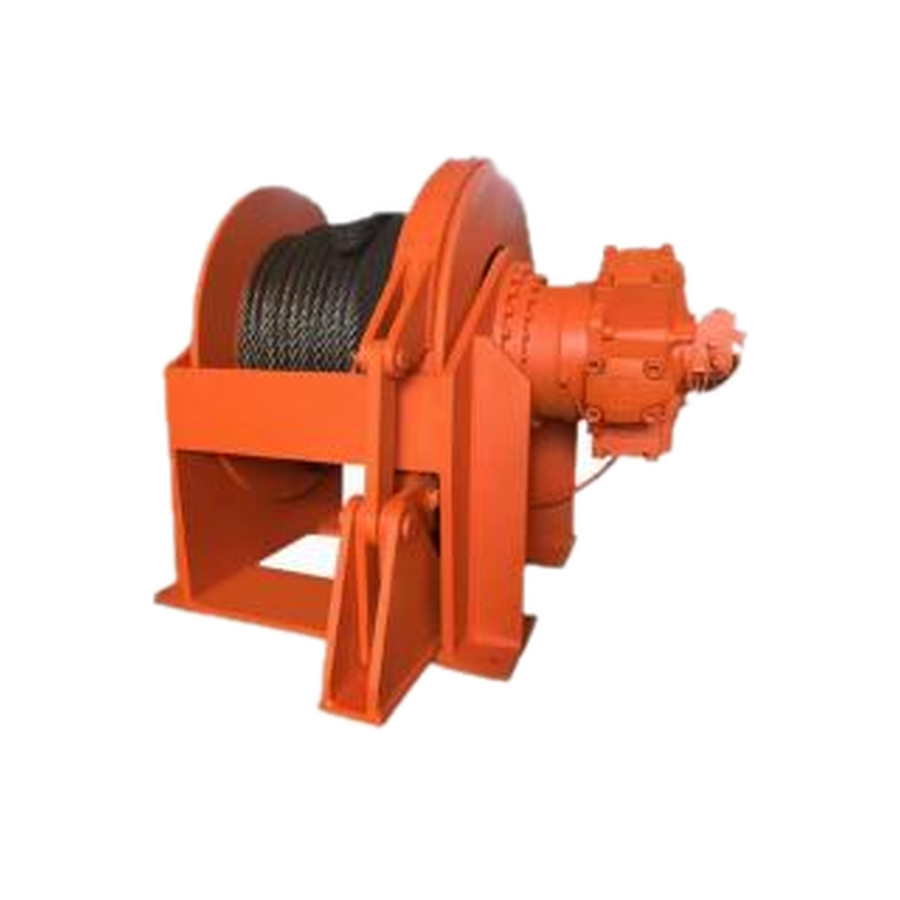
Calculate drum torque at the working layer
The effective radius increases as rope layers build. With constant available drum torque, line pull decreases on the outer layers. Always state whether the required pull is at the first layer or the top working layer.
Relate line speed to drum speed
Higher line speed requires more motor flow or a different gearbox ratio. Check acceleration and control response as well as steady speed.
Define rope and drum geometry
- Rope diameter, usable rope length and number of layers
- Drum core diameter, flange diameter and usable drum width
- Rope entry direction, fleet angle and level-wind requirement
- Frame envelope, mounting direction and service access
Confirm brake and hydraulic control
Load-holding winches normally require a spring-applied hydraulically released brake and a correctly matched counterbalance or over-center valve. The final circuit depends on lifting, pulling, towing, free-fall and emergency-lowering requirements.
This guide supports preliminary discussion. Final selection must be confirmed from the specific model data, hydraulic circuit, installation drawing and machine safety requirements.