Drum and rope interface
The steel drum winds the rope in and out. Its geometry follows rope diameter, required rope length and the number of layers. A rope anchor and suitable flanges are standard; multi-layer duties may also need a fairlead, roller guide or level-wind device.
Hydraulic motor
The motor converts hydraulic pressure and flow into torque and speed. Select it from line pull, line speed, duty cycle and available hydraulic power. Where a case drain is required, incorrect routing is a common cause of seal failure and overheating.
Planetary reduction
The gearbox reduces speed and multiplies torque at the drum. Gear ratio is one of the main choices that determines whether the winch behaves as a faster or stronger package.
Brake system
Heavy-duty winches commonly use a spring-applied, hydraulically released multi-disc brake as a fail-safe holding device. Frequent dynamic stopping, controlled lowering or free-fall functions need additional brake and circuit review beyond static holding.
Valve block and manifold
An integrated manifold can include pressure relief, counterbalance or over-center control, check valves and anti-cavitation functions. It improves commissioning and reduces plumbing errors when it is designed with the brake and motor.
Mounting and optional functions
The package also includes its frame, bolt pattern, couplings, guards and service access. Options may include clutch or disengagement, manual payout, level winding, encoders, load limiters and remote controls according to the confirmed application.
Four specifications that define the assembly
- Rated line pull and the stated rope layer
- Loaded and no-load line speed
- Rope diameter, length and expected layers
- Available pressure, flow, return pressure and duty cycle
Operating checks and common failure points
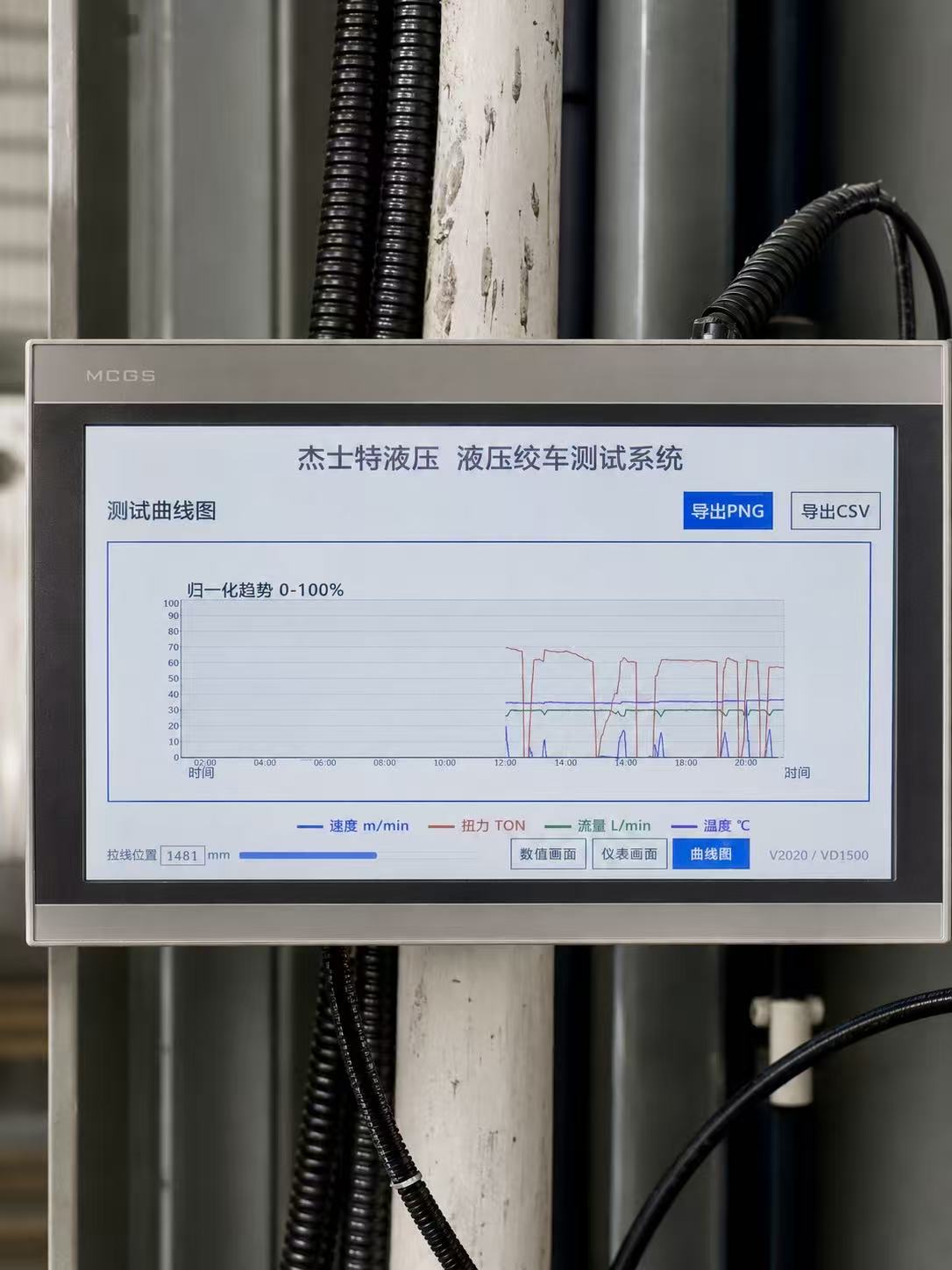
A complete test should use the agreed load, speed and hydraulic conditions. JST test equipment can record pulling force, rope speed, flow and oil temperature through the operating cycle.
High return backpressure can create heat and brake-release problems. Duty cycle is also frequently underestimated: a winch that works in short bursts may overheat during repeated or continuous operation unless the motor, circuit and cooling capacity are sized for that duty.
The acceptance checklist should state the rated and maximum line pull, rope layer, target line speed, test duration, repetitions, brake-holding requirement and allowable oil-temperature range.
Technical information is provided for preliminary selection. Confirm the selected model, installation and application requirements before ordering.